
OCR
PRODUCTS
-

Ergomed places patients and their care partners’ needs at the core of our services. We strive to build empathetic relationships with patients and their care partners, not just during the trial but also before and after. Our team provides personalized support, aiming to alleviate the burden of study participation. Ergomed and our trusted partners are deeply committed to bringing lifesaving treatments to patients.
-

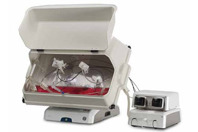
The ReadyToProcess WAVE 25 rocker features integrated temperature sensors and load cells, designed for convenient handling and control of cell cultures up to 25 L. A filter heater is delivered with the system.
-

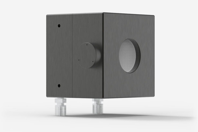
The IS50A-1KW-RMT is the highest-power joulemeter on the market, offering laser energy measurement up to 1 kW average power.
-

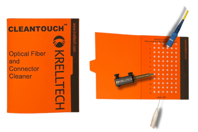
CleanTouch™ is a quick, gentle fiber cleaner for optical connectors and bare fibers, removing contaminants with a single touch. Sold in packs of 50.
-
 System: Leverage Flexibility And Speed")
Neither traditional nor hybrid clinical trials can operate on rigid EDC systems.
They require flexible data collection systems that support protocol amendments without downtime and accept mobile data without hassle. As a cloud-native solution, TrialKit bends to accommodate mid-study changes. And as the first full-featured EDC platform available as a native mobile app, TrialKit flexes to meet the demands of traditional, hybrid/decentralized, and completely remote clinical trials.
Give your team the freedom to build, deploy, and manage their studies, their way—weeks faster than with rigid EDCs and for a fraction of the cost of the major players.


WHITE PAPERS AND CASE STUDIES
-
 Metropolitan Sewer District Of Greater Cincinnati
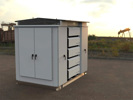
The Lower Mill Creek Partial Remedy (LMCPR) in Hamilton County, Ohio, is a large, complex effort to remove about 1.78 billion gallons of combined sewer overflows (CSOs) annually from the Mill Creek, an Ohio River tributary. When complete, LMCPR will improve water quality and serve as a catalyst to improve local neighborhoods.
-
 Fiber Optics & Optical Micromolding
Precision is a must with optical micromolding. Accumold’s twenty plus years of experience with ultra precision micro-molding lends itself well to this market. Extremely tight requirements with lens to lens centricity in 125 micron fiber arrays is an everyday process at Accumold
-
 Spectroscopy In The Automotive Industry
Spectroscopy is essential in the automotive industry for quality control, emissions analysis, developing advanced technologies, and ensuring compliance with strict environmental standards.
-
 Keeping The Lights On With Wolfspeed SiC
Introducing the “M” inverter, a modular, silicon carbide-based solution that optimizes utility-scale energy storage with higher efficiency, reliability, and scalability.
-
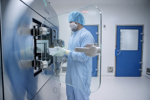
 CDMO Uses Robotic Gloveless Isolator For Advanced Therapeutics
CDMOs must innovate production architectures to meet the demands of advanced therapeutics to ensure a reliable supply and compliance. Discover how these approaches advance modern medicine and improve patient outcomes.
-
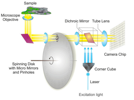
 Maximizing The Performance Of Advanced Microscopes By Controlling Wavefront Error Using Optical Filters
Optimizing fluorescence microscopy requires selecting optical filters that minimize wavefront distortion, ensuring high contrast and resolution. Semrock filters provide precise performance for demanding imaging applications.
-
 High-Volume Optical Manufacturing Up To 100,000 Parts Per Month With Timely Delivery
Precision Glass & Optics, a world leader in the optical manufacturing industry for nearly 40 years, announces the improved capability to produce high-volume, high-quality optical components that operate from 0.2 um to 15 um.
-
 Organizational Assessment For A Large MedTech Company
Explore an organizational assessment run for a medical technology company specializing in tissue repair and regeneration, and the actionable recommendations provided to facilitate future growth.
-
 Flexible Data Management For Growing Portfolio
Explore strategic enhancements to a small biopharma's biometrics capabilities involving the deployment of 20 specialized professionals, which effectively bolstered the client’s organizational capacity.
-
 Automating The Process Of Filling Media Into Bottles
Learn how a vaccine manufacturer using a wide range of containers for media and buffer filling was able to increase efficiency by 70% with an automated closed-system solution.
-
 Leading Recruitment With A Strong Alzheimer's Referral Pool
A strong referral network helped the Gainesville site rapidly recruit pTau217‑positive Alzheimer’s participants while upholding high data quality, boosting enrollment and outperforming other sites.
-
 University Of Ottawa Relies On The BEAMAGE Series To Measure Laser Profiles
The University of Ottawa lab successfully used beam profilers to improve Power-Over-Fiber receiver chip development, ensuring precise, efficient laser measurements for advanced photonic research.








NEWS
-
G&H Awarded Certificate Of Appreciation By NEC Space Technologies For World-first Space Optical Fiber Amplifiers11/6/2025
Space-qualified optical amplifiers enabled record-breaking inter-satellite laser links, earning recognition for advancing high-speed GEO–LEO communications and paving the way for future space-to-ground optical networks.
-
Engineering The Next Wave Of Imaging With Photonic Integrated Circuits3/2/2026
Learn how photonic integrated circuits are reshaping the future of imaging, and why PhotonDelta is inviting engineers to rethink how PICs can tackle imaging challenges of today and power the next generation of innovation.
-
A Breakthrough In Laser Cooling: Trapping Of A Stable Molecule With Deep Ultraviolet Light11/10/2025
Researchers from the Department of Molecular Physics at the Fritz Haber Institute have demonstrated the first magneto-optical trap of a stable ‘closed-shell’ molecule: aluminum monofluoride (AlF).
-
Zenni Optical Appoints Yodel Mobile To Lead Full-Funnel Mobile Growth Strategy6/30/2025
We’re delighted to announce that Zenni Optical, America’s largest online eyewear retailer, has appointed Yodel Mobile to unlock mobile growth across the U.S. with a sharp focus on data-led decision-making and performance reporting.
-
CEA-Leti Builds Pathways To Improved Chemical Detection, High-Speed Communication And LIDAR Performance Via Integrated Optics-On-Silicon Advances1/30/2025
CEA-Leti scientists presented three papers at Photonics West 2025 detailing the institute’s latest R&D successes to improve chemical detection, high-speed communication and LIDAR performance with integrated optics on silicon.